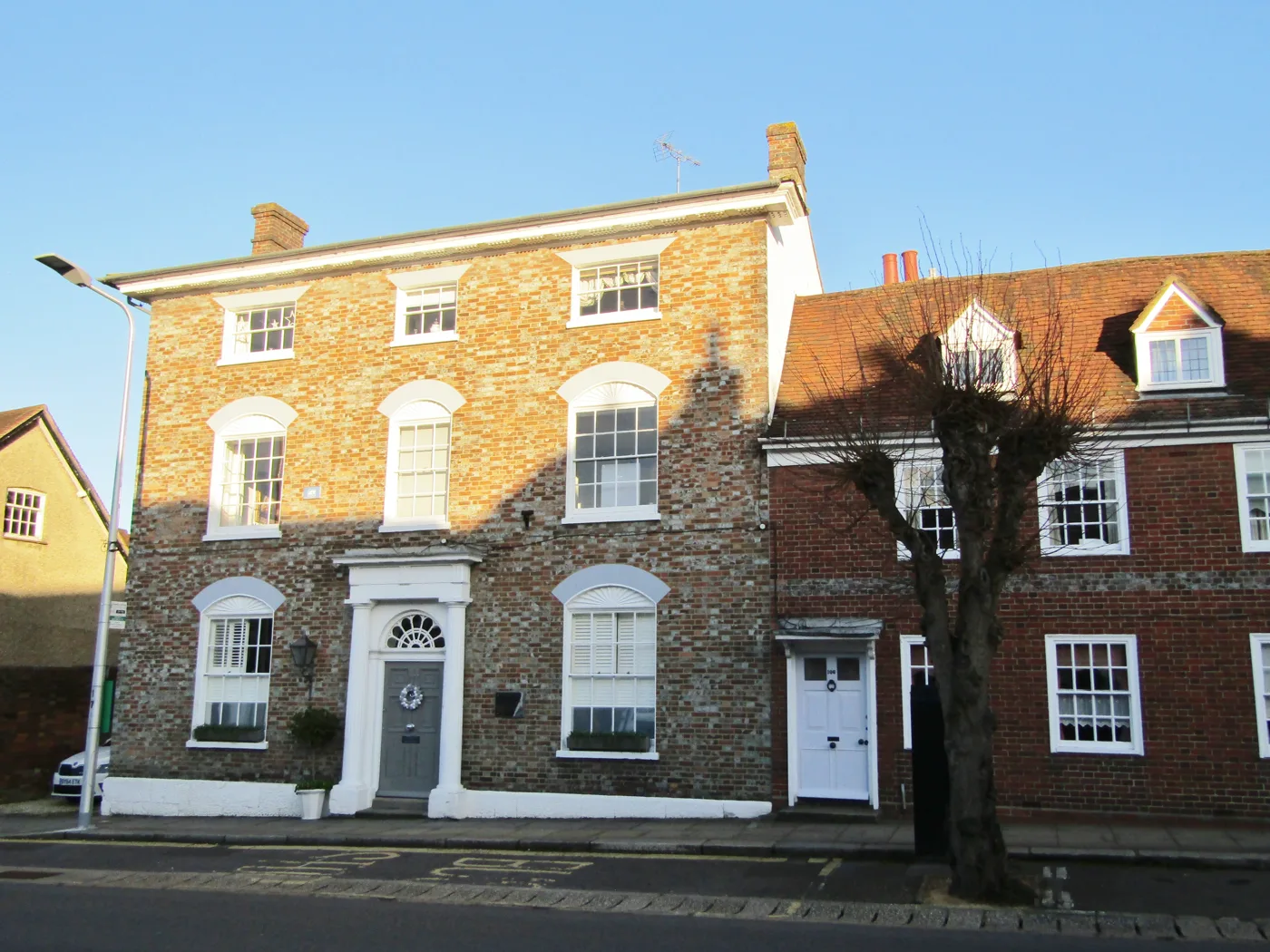

Councillors approved the former care home for up to 16 residents. Police wanted 24-hour security conditioned; officers said that is not a planning matter.
West Berkshire Council has approved its own plan to turn Hungerford’s former care home into temporary accommodation for up to 16 people in housing need. Thames Valley Police asked for round-the-clock security to be written into the permission as a condition. It was not, and the council’s officers explained why: they do not regard it as a planning matter at all.
The Western Area Planning Committee took the decision on the evening of Wednesday 16 September. The council confirmed it in a statement the following afternoon.
“At last night’s Western Area Planning Committee, the decision was made to approve the application to turn the former Chestnut Walk care home back into use as temporary supported accommodation for local residents, including families and couples in housing need.”
(West Berkshire Council, 17 September 2026)
The council added that procurement for a main contractor is now being launched, with works expected to start later this year.
Hungerford is about eight miles west of Newbury. We reported the police’s earlier holding objection to this application in August.
What the police asked for in the end
Thames Valley Police had a long list of concerns about the building: access controls, the number of doorsets, compartmentation of units, boundary treatment, secure bin and cycle storage, window and door specifications, and CCTV. Officers met the force on 27 August to work through them.
The force then came back twice in the week before the meeting, and both responses are recorded in the council’s update report.
On Friday 11 September it objected. Its argument was about permanence:
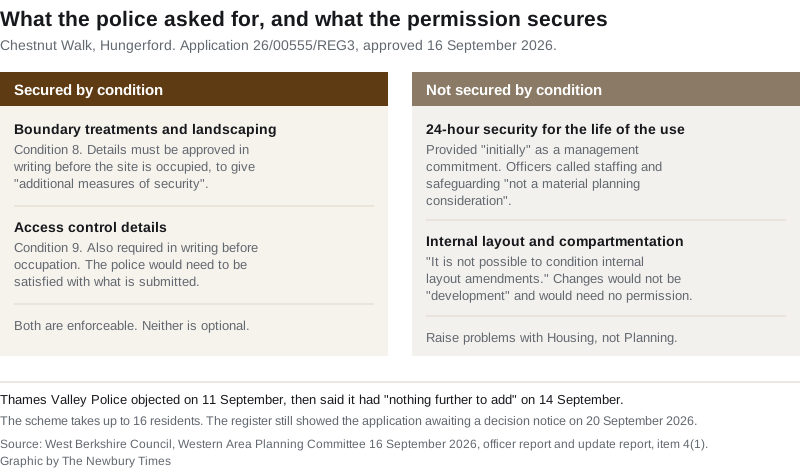
“The 24hr staff presence and security are only proposed initially and is intended to be reviewed. 24hr staff presence will be essential in the absence of addressing layout concerns. It will not be possible to conclude that 24hr staff presence is not required on the basis of no issues occurring, as occupants will change over time and new issues may arise. 24hr security staff should be a requirement for as long as the use is in operation, and this should be conditioned.”
On Monday 14 September it stood down, conditionally:
“TVP understood that it was the intention to make changes to the internal layout to aid compartmentation and change the location (and details) of the cycle storage area. If this can be dealt with through conditions, and the Council is minded approving the application with recommendations, TVP has nothing further to add.”
Why the 24-hour security was not conditioned
The update report answers the 11 September objection directly, and the reasoning matters more than the outcome:
“The latest objection by Thames Valley Police relates to the proposed development’s management and matters of safeguarding. Such issues do not relate to whether the proposed use of the site is acceptable and are therefore not a material planning consideration.”
Two further points in the same report set the limits of what a planning permission can do here:
- “It is not possible to condition internal layout amendments”, so the compartmentation the police wanted cannot be secured through the permission
- “Any internal layout changes would not be classed as ‘development’ under the Town and Country Planning Act and would not require planning permission”
That second point is the significant one. The internal arrangement of the building, which is what the police’s concerns were mostly about, sits outside the planning system altogether. It can be changed later without anyone applying for anything.
On staffing, the council’s Housing Service told the committee that 24-hour on-site security would be provided initially, and that any future change would be “evidence-led, proportionate, and subject to an appropriate risk assessment”. The officer report puts the same thing more plainly: the arrangements “may be reviewed in the future … should the site demonstrate a sustained record of positive outcomes and effective operation”.
What the permission does secure
Two of the police’s points did become conditions, and both must be satisfied before anyone moves in.
- Condition 8, boundary treatments and landscaping. The site cannot be occupied until details are submitted and approved in writing, and the stated reason is “to ensure that the landscaping and boundary treatments provide additional measures of security”
- Condition 9, access control. Again, no occupation until access control details are submitted and approved in writing
The update report notes that if members approved the scheme subject to the access control condition, the layout question would be “discussed further with Thames Valley Police”, and that the force “would need to be satisfied that the proposed access control provisions are acceptable and that layout amendments are no longer necessary”.
Other commitments appear in the officer report rather than in the conditions. CCTV would be installed at the building’s access and exit points. The family units would be self-contained with their own lockable access, so families would not need to use shared facilities. The communal kitchen would have controlled opening and closing times.
What the neighbours had said
The objections on the register ranged well beyond security. Residents argued the hostel is not needed in Hungerford, that the site is in a quiet residential area near family homes, schools, the recreation ground, the skate park and the football club, and that Thatcham or Newbury would be better placed for support and emergency services. Others raised fear of crime, noise, parking and traffic, property values, and the effect on the North Wessex Downs National Landscape.
Several said they would rather have had affordable housing, social housing, or the residential development previously proposed for the site.
Officers recommended that the Development Control Manager be authorised to grant conditional permission, and the committee agreed.
What it means for you
If you live near Chestnut Walk, the things you can still influence are the two conditions. Boundary treatment, landscaping and access control details all have to come back to the council for written approval before the building is occupied, and those submissions appear on the public register like any other application document.
The 24-hour staffing is a management commitment, not a planning obligation. That means the route for raising problems later is the council’s Housing Service and the complaints process, not the planning department. The officer report says any patterns of anti-social behaviour “could be reported to the Council to address”.
One practical caveat on timing. The council’s planning register still recorded the application as “awaiting decision” when we checked on 20 September, because the formal decision notice had not yet been issued. The draft minutes of the 16 September meeting had not been published either, so the wording of the resolution and any vote are not yet on the record. The council’s own statement is the confirmation that the application was approved.
You can follow the application on the council’s planning register, and we track the district’s bigger cases on our Newbury planning news page.
Sources
- West Berkshire Council, “Planning application approved to turn former care home into temporary accommodation”, 17 September 2026 for the decision, the description of the accommodation and the contractor procurement.
- Update report for item 4(1), Western Area Planning Committee, 16 September 2026 for the Thames Valley Police responses of 11 and 14 September, the officers’ material consideration reasoning, the limits on conditioning internal layout, and the Housing Service position on 24-hour staffing.
- Officer report for 26/00555/REG3 for the police’s original list of concerns, the 27 August meeting, the staffing, CCTV and family unit arrangements, the public objections, the recommendation and conditions 8 and 9.
- West Berkshire Council, Western Area Planning Committee, 16 September 2026 for the agenda and published documents.
- West Berkshire Council planning register, 26/00555/REG3 for the application status on 20 September 2026.
Have your say